
Ferrous decontaminant Iron Cleaner FullCarX 750 ml
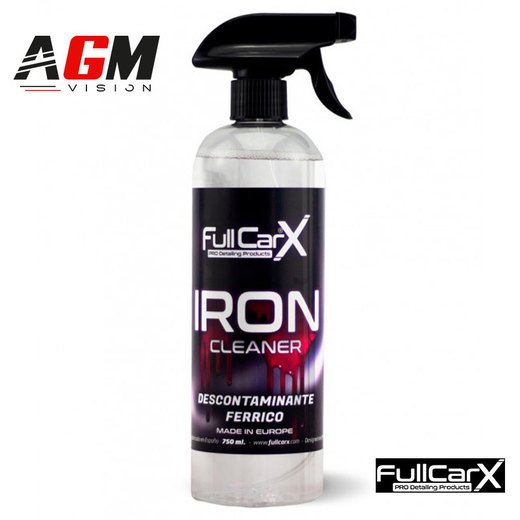

pH-neutral ferrous decontaminant that dissolves embedded brake dust on rims and bodywork, without acid. Its indicator turns purple during action and signals when to rinse. In a 750 ml bottle.
Secure payment
Your payment details are entered on our bank's or PayPal's website, never on ours.






Ferrous decontaminant Iron Cleaner FullCarX: brake dust dissolved without acid
The Iron Cleaner FullCarX ferrous decontaminant is a pH-neutral cleaner designed to remove metallic particles embedded in wheels and bodywork. It is aimed at motorists and detailers who notice persistent dark or orange spots after a standard wash, both on aluminum, painted, or chrome wheels and on the vehicle’s paint.
Why wheels get recontaminated constantly
With every braking, the pads release scorching metallic dust that becomes lodged in the wheel clear coat and in the paint on the lower sills. A shampoo glides over it without dislodging them: these particles remain anchored, oxidize, and dull the surface. The ferrous decontaminant acts chemically on these deposits to dissolve them, instead of tearing them off.
What the Iron Cleaner FullCarX does
- Dissolves brake dust and accumulated grime on the wheels as well as on the bodywork.
- pH-neutral, acid-free formula, usable on aluminum, painted, or chrome wheels.
- Purple color indicator: the product turns purple while it reacts, which makes its action visible and gives an idea of the level of contamination.
- Compatible with brake discs and calipers, as well as with motorcycle wheels.
- 750 ml spray bottle, ready to use, to be sprayed neat without dilution.
When to use it
Ferrous decontamination comes after washing and before any protection step. On very dirty wheels, it complements a wheel cleaner that first removes the greasy film and surface dirt. Once the wheel is decontaminated and rinsed, applying a protective wax for wheels limits the adhesion of subsequent dust and makes later washes easier.
Instructions for use of the ferrous decontaminant Iron Cleaner FullCarX
The FullCarX Iron Cleaner is used neat, directly with a sprayer, on a dry surface. The key point is the dwell time: the product must react and must never dry on the surface.
Decontaminating wheels
- Work on cool wheels and in the shade, never in direct sunlight or just after a drive.
- Spray the product directly onto the dry wheel, covering both the outside and the inside.
- Let it work until a purple tint appears, a sign that the reaction on ferrous particles has started.
- Use a wheel brush or a microfiber to loosen the most stubborn residues.
- Rinse thoroughly with pressurized water, without letting the product sit.
- Repeat the operation if dark spots remain.
Decontaminating a bodywork
- Wash and rinse the vehicle, then let the paint dry.
- Spray on the most exposed areas: rocker panels, rear fenders and tailgate.
- Wait for it to turn purple, without exceeding two minutes of dwell time.
- Rinse with plenty of water before moving on to drying, then protection.
Precautions
- Never exceed two minutes of contact and do not let the product dry on the surface.
- The strong odor is inherent to the product's composition: it is normal. Work in a ventilated area.
- A set of wheel brushes makes it possible to reach the inside of the spokes without marking the clear coat.
Compatible surfaces and place in the washing routine
Choosing the right product depends on the type of dirt to be treated. Iron Cleaner FullCarX specifically targets metallic particles, which sets it apart from the other steps in a detailing routine.
Compatible surfaces
- Aluminum rims, painted rims, and chrome rims.
- Motorcycle rims.
- Brake discs and calipers.
- Bodywork, for brake dust embedded in the paint.
What it does not replace
A ferrous decontaminant only removes iron. Tar residues, sap, and sticky marks require a dedicated solvent, and the roughness that remains to the touch after chemical decontamination is treated with a decontamination clay bar. It also does not replace shampoo: decontamination is always performed on a surface that has already been washed.
Recommended frequency
Ferrous decontamination is scheduled when dark or orange spots reappear on the rims or rocker panels, and systematically before applying a protection. A vehicle that is driven a lot or whose brake pads emit heavily requires more frequent passes, while a wax or sealant applied right after decontamination clearly spaces out the following treatments.
- Blue microfiber applicator Chemical Guys
- All-purpose cleaner All Clean Chemical Guys
- Orange Degreaser Chemical Guys
- Invisible All-Purpose Cleaner Chemical Guys
- Degreaser Wipe Out Chemical Guys
- Tar remover adhesive remover D-CON Chemical Guys
- HydroSpin Chemical Guys ceramic wheel spray
- Red Devil HD Nano Shiny Garage Degreasing Cleaner
- Sticky Citrus Chemical Guys Wheel Cleaner Gel
- Insect cleaner Insect Remover FullCarX
- Wheel Cleaner Rim Cleaner FullCarX
- Body degreaser Body Degreaser FullCarX