
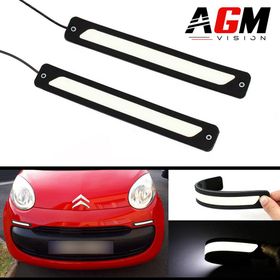
Flexible LED daytime running lights, 22 x 3 cm, white look
Fit all shapes.
(Without indicator fun...
€16
58
In stock
Products related to this item
Flexible LED daytime running lights, 22 x 3 cm, white look
Fit all shapes.
(Without indicator fun...
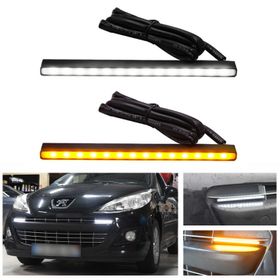
Ultra-compact LED daytime running lights, 15 cm x 8 mm, with dynamic turn signal option.
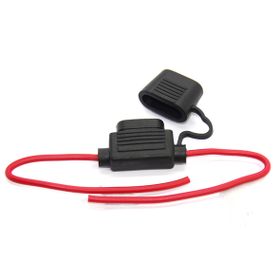
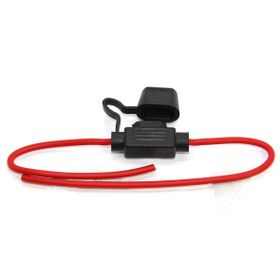
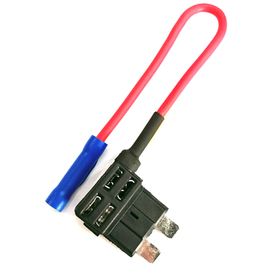
Easily add a new power supply while protecting the vehicle's original circuit.
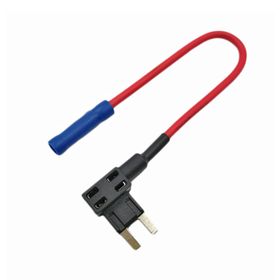
Easily add a new power supply while protecting the vehicle’s original circuit.
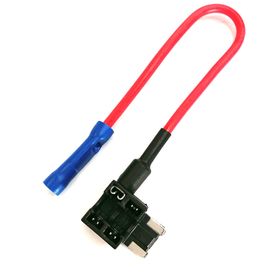
Easily add a new power supply while protecting the vehicle’s original circuit.
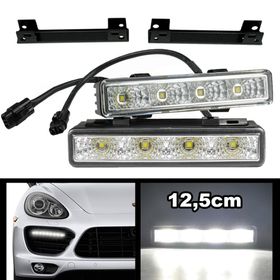
12V-16V 20 Watts
Complete daytime running lights kit 12.5x2cm, fixings included, control unit, white lighting co...
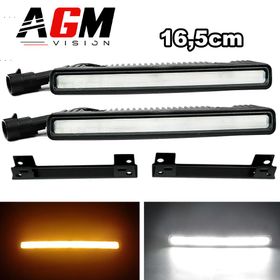
12V-16V 22 Watts
White LED daytime running light kit 16.5x2cm, fixings included + fixed indicator + control unit...

12V-16V 3 Watts
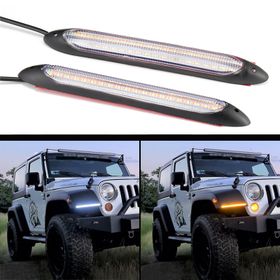
12V-16V Watts
Size: 15 to 27 cm. Version without module, daytime running lights with LED animation at startup...
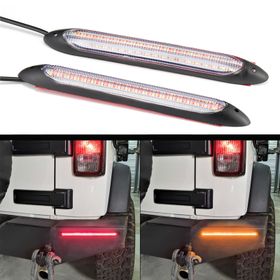
12V-16V Watts
Size: 15 to 27cm. Version without module, red lights with LED animation at startup + red LED st...
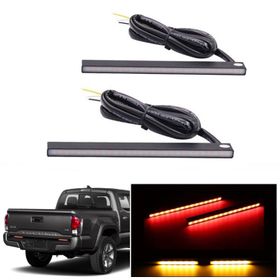
Ultra-compact LED tail lights (15 cm x 8 mm), dynamic flashing option
Daytime comes from the Latin « diurnus », which means « during the day ». Daytime running lights are therefore lights specific to vehicles driving during the day. They are more commonly called daytime lights.
They are used to be more visible during the day. If this could create debates at the time, today we see that these daytime lights make it easier to see the vehicles that are equipped with them. They are designed to prevent collisions, especially when traffic is dense or during overtaking.
Daytime running lights are also used to anticipate sudden changes in brightness, such as passing through a tunnel, a wooded area or under a bridge. Some are equipped with a flashing function, to warn other road users when changing direction. Two flashing versions are available : the fixed orange indicator or the « back-and-forth » flashing, smoother and more modern, also called « dynamic indicator » or « sequential indicator ».
Daytime light management can be greatly improved thanks to the addition of a DRL module, which makes it possible to secure your electrical installation and obtain new operating modes.
Daytime running lights have also become an aesthetic element of a car, a motorcycle or a truck, as with the Flexible Mirage LED daytime lights (multicolored), which allow you to change the color. New styles of « New Age » animated daytime lights are appearing. Equipped with different modes and variations of kinematics, they are often visible as soon as the vehicle is started, or simply by unlocking it with the key, as on certain prestige vehicles such as the Audi RS7.
Ten years later, it may seem quite surprising, but the implementation of daytime running lights was trench warfare on several levels. First of all, legitimate questions were raised about the effectiveness of these daytime lights. Then, was the gain worth the additional cost for manufacturers, consumers and the environment ? Finally, was this not going to cause confusion for other users, such as two-wheelers, but also pedestrians ?
The European Union did not decree this obligation without having carried out an in-depth study, and two surveys came to support its choice. It was necessary, on the one hand, to gather all the studies conducted on the subject in 1995 and, on the other hand, to analyze more precisely the effects of daytime lights on so-called vulnerable users. The results were eloquent. On the one hand, pedestrians saw cars better ; on the other, bicycles and motorcycles did not suffer from possible confusion. In the end, vehicles are 10 to 15 % more visible with daytime running lights.
In light of these studies, European regulations require daytime running lights for manufacturers for new cars sold from 2011. This European law is transcribed in Article R313-4-1 of the Highway Code. For the recalcitrant, it is a fine of 135 euros if you drive with the daytime running lights off. This rule does not apply to cars produced before 2011, which have absolutely no legal obligation to be equipped.
Manufacturers dragged their feet in the face of this new obligation imposed on them. Like it or not, they integrated the law into their specifications without prices being impacted. As a LED brand, we have developed a range of daytime lights varied in terms of price, style, dimensions, shapes and operation, adapted to vehicles that do not have them.
For the environment, the use of LEDs helps limit additional gasoline consumption, compared with two conventional bulbs remaining on continuously. Motorists tend to think that only the engine consumes fuel, but everything that requires energy draws from the tank. The environmental question was therefore raised, but the new LEDs make it possible to set aside this issue.
In terms of safety, the daytime running lights law is precise. You will not be able to install long-range lights or an LED bar in place of daytime running lights !
Daytime lights must :
First step before any intervention, start by looking for a location for the daytime lights of your vehicle. We advise installing them in the most visible way possible, and high enough to be seen.
Second step, choose the most suitable daytime lights in relation to the available space, the location, the aesthetics, as well as the shape of your automobile.
Different types of daytime lights are available on the AGM Vision website. For each installation, there is a suitable daytime light !
Third step, carry out the mounting of the daytime lights using the supplied brackets. When it is a flexible LED strip, the hold is generally obtained using double-sided adhesive. Some daytime lights are fixed thanks to a metal bracket, which also makes it possible to adjust the orientation. For discreet integration, it is sometimes necessary to make a cut using a template.
Finally, the fourth and last step consists of carrying out the electrical connection of the daytime running lights. Here is, in detail, a professional procedure. Be careful not to connect your daytime lights to just any electrical source, as this can have harmful effects on the operation of the vehicle. Once the electrical supply has been found, it is advisable to install a protective fuse. At the AGM Vision workshop, we use double-level fuse holders, which allow a quick and reliable connection.
To benefit from automatic and secure management of daytime lights, it is preferable to install, between the daytime lights and the electrical supply, a DRL module. Two versions of DRL modules exist :
This module requires technical knowledge to be properly connected. To carry out the wiring, it will be necessary to consult the AGM Vision instructions provided when purchasing this Multifunction DRL module.
You now know the usefulness of daytime running lights and the installation procedure for your daytime lights !