
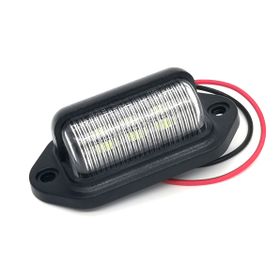
0.25 watts 10 lumens
Universal LED module for motorcycle, car, trailer license plate lighting....
€5
79
In stock
Products related to this item
0.25 watts 10 lumens
Universal LED module for motorcycle, car, trailer license plate lighting....
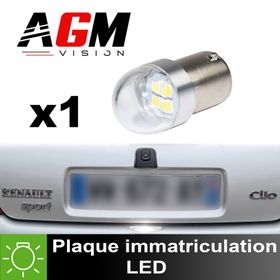
2.5 watts 410.6 lumens
Our LED R5W is ideal for illuminating your Renault Clio 2 license plate, it consists of 4 Lumil...

Light up your Renault in style with the kit of 2 LED lighting modules for license plate Renault...

Light up your Peugeot in style thanks to the kit of 2 LED lighting modules for the license plat...

Light up your Mercedes in style thanks to the kit of 2 LED lighting modules for Mercedes Type 4...
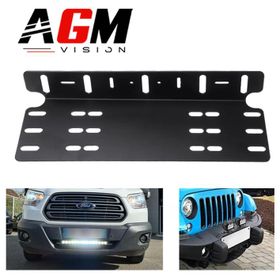
Innovative mounting bracket for European license plates, designed to facilitate the installatio...

6 watts 730 lumens
The T10-W5W LED bulbs High Power, supplied in this License Plate Lighting Pack for Renault Mega...
The license plate bulb is undoubtedly the most discreet lighting on your vehicle, and yet one of the most checked. It ensures your plate is readable at night, determines the validity of your roadworthiness test, and exposes you to a fine in the event of a failure. This complete guide, updated for 2026, takes stock of the regulations in force, the penalties incurred, the roadworthiness test criteria, as well as the choice, installation and maintenance of your plate lighting, whether it is classic bulbs, LEDs or Plug & Play modules.
✅ In 2026, in France, rear license plate lighting remains mandatory for all registered vehicles. The reference text has not changed: it is article R313-12 of the Highway Code, which requires that the rear plate be readable from a minimum distance of 20 meters:
Any motor vehicle or any trailer must be fitted with a lighting device capable of making readable, from a minimum distance of 20 meters, at night, in clear weather, the number shown on its rear license plate or on its operating plate. For towed agricultural vehicles, this device may be fixed on a removable support.
This obligation concerns a very wide range of vehicles: cars, motorcycles, scooters, trailers, caravans, motorhomes, quads, trucks, agricultural machinery, etc. Only emergency and firefighting vehicles may be exempt, when this requirement is incompatible with their technical characteristics:
The provisions of this article apply to special vehicles and equipment of emergency and firefighting services only if they are compatible with their technical characteristics of manufacture or use.
On the other hand, front license plate lighting is not required by law. No lighting device is required at the front of the vehicle for the plate.
In the event of non-compliance with the regulations, two levels of penalties apply in 2026:
Good news: these offenses result in no points deduction on the driving license. Law enforcement may nevertheless require compliance, or even immobilize the vehicle in the most serious cases. A plate bulb costs a few euros: might as well not take the risk.
As part of the roadworthiness test, rear plate lighting is subject to a rigorous check, under the category “Condition and operation (rear license plate lighting device)”. Six criteria are assessed, with two levels of severity:
In practical terms, if your vehicle has two plate lights and only one works, you get a minor defect, without a re-test. If no bulb lights up anymore, it is a re-test for sure. Checking your bulbs before the test takes thirty seconds and avoids a second presentation.
Note: since April 2024, the roadworthiness test also applies to motorcycles, scooters and other motorized two-wheelers. In 2026, your motorcycle’s plate lighting is therefore also checked: a point often neglected on customized motorcycles whose plate holder has been modified.
The Highway Code does not explicitly specify the color of plate lighting, but this should not be taken to mean that total freedom is granted. A decree of March 26, 1998, transposing European directive 76/760/EEC, states that the light emitted must be white and must not alter the original color of the plate. Using blue, green or purple bulbs is therefore illegal and exposes you to the €135 fine for non-compliance.
As for vehicles displaying yellow or orange plate lighting, they are not necessarily in violation: the requirement for white light applies only since October 1, 1998. Vehicles approved before this date may keep their original lighting, in accordance with the legislation of the time — like other equipment on classic cars, such as classic models without seat belts.
License plate bulbs mainly come in three families: traditional incandescent bulbs, modern LED bulbs and Plug & Play LED lighting modules. Each solution has its advantages: warm light and low cost for incandescent, energy efficiency and pure white for LED, perfect compatibility for Plug & Play modules, particularly suited to German vehicles equipped with a defective bulb detection system (CANbus).
➡️ The most common bases for plate lighting are T10 W5W, the C5W festoon and, more rarely, the R5W. If you want to switch to LED in a simple way, without a dashboard error and with 100% guaranteed compatibility, choose from our LED license plate lighting modules, specially designed for each car make and model.
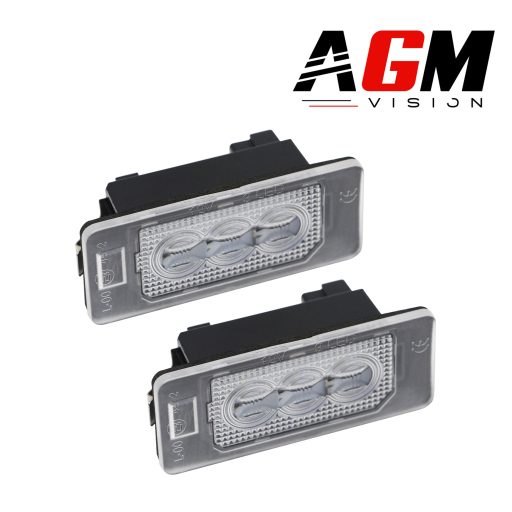
✅ In stock
For plate lighting, LED is now the most rational choice. It consumes up to 80% less electricity than an incandescent bulb and offers a much longer lifespan — several tens of thousands of hours, compared with a few hundred for a classic bulb. Result: fewer replacements, less risk of driving with a burnt-out light, and a more favorable environmental footprint over the entire life cycle.
The pure white of LEDs (generally 6000K) perfectly meets the regulatory requirement for white light, while giving the rear of the vehicle a more modern look, in harmony with the LED daytime running lights of recent vehicles. Just make sure to choose a quality LED, with a compliant white shade, without excessive bluish drift.
The choice is not limited to the preference between LED and incandescent. Four criteria should guide your purchase: brightness (sufficient for readability at 20 meters, without dazzling), light color (white mandatory), compatibility with your vehicle (base and CANbus system) and durability. An informed choice guarantees better performance and avoids frequent changes.
➡️ If in doubt, use our LED search by vehicle or by license plate on your brand page, or contact us by phone: we will indicate the reference exactly compatible with your model.
Installing a new bulb may seem intimidating, but it is one of the simplest interventions to do yourself, in a few minutes and with a simple screwdriver:
This method may differ depending on your vehicle model. On some recent models, the plate light is a complete block to unclip: this is precisely the case covered by our Plug & Play LED modules, which are replaced in one minute, without specific tools.
Regular maintenance ensures the longevity and reliability of your plate lighting. A few simple actions are enough: clean the transparent cover (dirt can greatly reduce plate readability), check the condition of the connections and seals, and check the operation of the lights once a month — a useful reflex also before each roadworthiness test or before a long night trip.
Yes. Any registered vehicle must have a functional rear plate light, making the plate readable from 20 meters at night, in clear weather (article R313-12 of the Highway Code). Only the front plate is exempt from lighting.
A defective or missing bulb is punished by a fixed fine of €68, with no points deduction. Non-compliant lighting (prohibited color) is punished by a €135 fine.
No. The light must be white and must not alter the color of the plate (decree of March 26, 1998). Any other color exposes you to a €135 fine, except for vehicles approved before October 1, 1998, which keep their original lighting.
Yes, provided they emit compliant white light. Plug & Play LED modules, designed brand by brand, also guarantee total compatibility with CANbus systems, without an error message on the dashboard.
Yes. A totally defective light source is classified as a major defect and requires a re-test. If only one bulb out of two works, it is a minor defect, simply mentioned on the report.
The easiest way is to use our LED search by license plate on agmvision.com: enter your plate and we offer you the references exactly compatible with your vehicle, including our Plug & Play LED plate modules.