
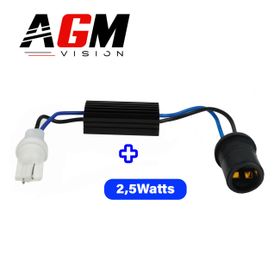
+/- 2.5 watts 12V-16V
100% Plug & Play anti-error module for W5W position light, very compact and safe (thermal prote...
€3
75
In stock
Products related to this item
+/- 2.5 watts 12V-16V
100% Plug & Play anti-error module for W5W position light, very compact and safe (thermal prote...
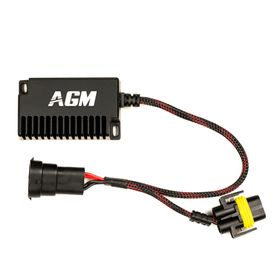
+/- 12 Watts 12V-16V
Can-PRO H8/H9/H11/H16, Slim Size, neutralizes 95% of OBD errors. The most effective for increas...
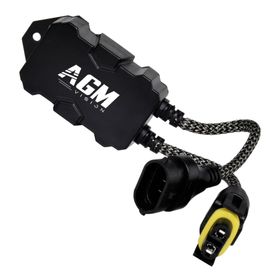
+/- 5 watts 12V-16V
H8/H9/H11/H16 module/filter, removes bugs and reduces light flashes.
This anti-error & flash mod...
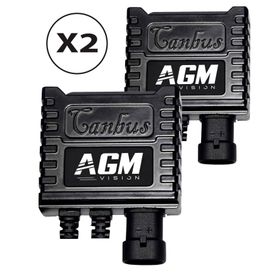
Variable watts 12V-16V
With the SUPREME anti-error module, eliminate 96% of errors on your dashboard and reduce flashe...
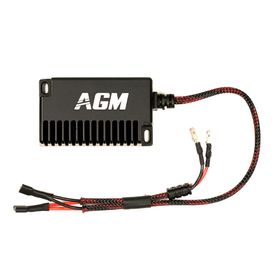
+/- 12 Watts 12V-16V
Can-PRO H1, Slim Size, neutralizes 95% of OBD errors. The most effective for increasing the ele...
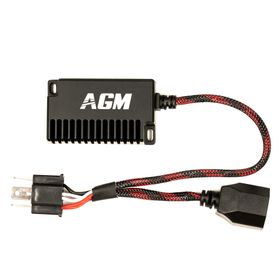
+/- 12 Watts 12V-16V
With the Can-PRO H4 anti-error module, remove the majority of OBD warning lights from your dash...
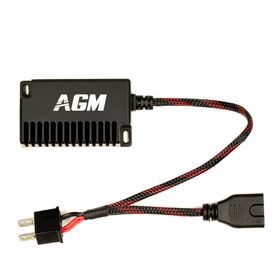
+/- 12 Watts 12V-16V
Can-PRO H7, Slim Size, neutralizes 95% of OBD errors. The most effective for increasing the ele...
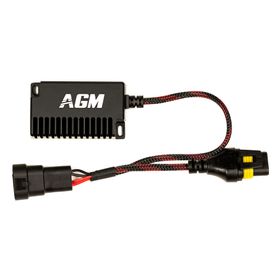
+/- 12 Watts 12V-16V
With its slim size, the Can-PRO HB3/HB4 anti-error module eliminates 95% of OBD errors. Designe...
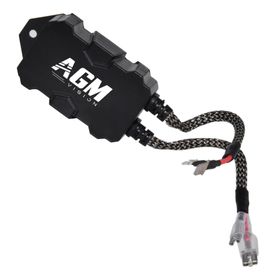
+/- 5 Watts 12V-16V
H1 module / filter, removes bugs and reduces light flashes.(Know that it is necessary to buy on...
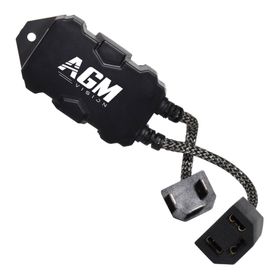
+/- 5 Watts 12V-16V
H4 module / filter, Removes bugs and reduces light flashes.(Know that it is necessary to buy on...
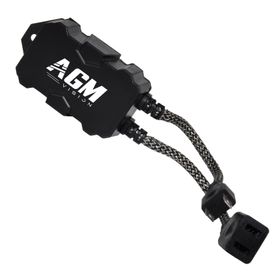
+/- 5 Watts 12V-16V
H7 module / filter, removes bugs and reduces light flashes.
This anti-error & flash module, spec...
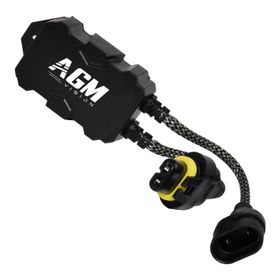
+/- 5 watts 12V-16V
Module / filter: removes bugs and reduces light flashes.(Note: it is necessary to buy one modul...
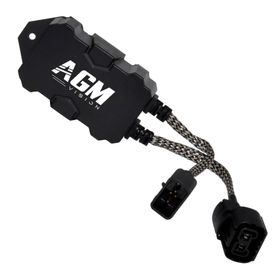
+/- 5 watts 12V-16V
Module / filter, Eliminates bugs and reduces light flashes.(Know that it is necessary to buy on...
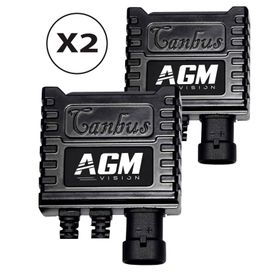
Variable watts 12V-16V
The Supreme H1 anti-error module, one of the best on the market, reduces vehicle flashes and el...
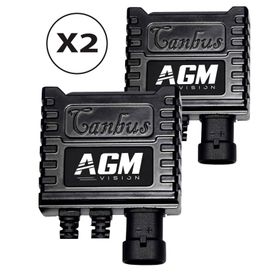
Variable watts 12V-16V
The Suprême H4 anti-error module removes 96% of a vehicle's OBD error lights thanks to its inte...
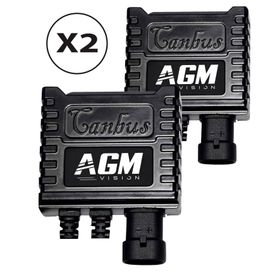
Variable watts 12V-16V
This multifunction anti-error unit has been designed for trucks and multiplexed vehicles. It ne...
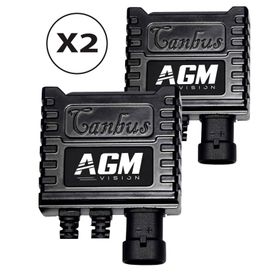
Variable watts 12V-16V
With the Suprême HB3/HB4 anti-error module, benefit from an all-in-one intelligent unit: reduce...
You have just installed LED bulbs in place of your halogens and an orange warning light has come on on the dashboard? Your lights shimmer, flash, or go out intermittently? These symptoms have a name: the CanBus error. It is very common on recent vehicles and, in the vast majority of cases, it is corrected easily. Let’s see why it appears and how to remove it permanently.
The CAN bus (Controller Area Network) is the electronic network that allows a vehicle’s control units to communicate with each other. On modern cars, this network constantly monitors the status of each bulb. When it detects an abnormally low electrical consumption, it concludes that a bulb is faulty and triggers an alert: this is the “CanBus error.” In short, the system mistakes the low consumption of an LED for a blown bulb.
A classic halogen bulb consumes about 55 W, while an equivalent LED often consumes only 15 to 25 W. This load difference is interpreted by the onboard computer as a missing or out-of-service bulb. The vehicle then reacts in one of these ways:
The more recent and well-equipped a vehicle is (generally after 2010), the more likely its CanBus network is to react to this change in consumption.
The most common signs are an orange warning light on the dashboard, constant flickering, random shutdown of the lights after a few seconds, a turn signal that is too fast (hyperflash), or even the inability to turn off certain daytime running lights. The lighting may work correctly despite the message: this is a false positive diagnosis, not a real failure.
There are three main solutions, from the simplest to the most technical.
This is the simplest and most reliable option. These bulbs directly include the electronics that simulate the consumption of a halogen. In about 95 % of cases, they are enough to eliminate the error without additional components or wiring, which makes it the recommended solution for most drivers.
The CanBus decoder (anti-error module) is a small box that connects in series between the bulb and the wiring harness. It stabilizes the voltage and simulates the load of a halogen, which eliminates the warning light and flickering. It is used when the bulb alone is not enough, especially on the most demanding vehicles.
The load resistor (or load resistor) is mounted in parallel with the bulb holder to restore the expected consumption. It is effective, but has two drawbacks: it heats up strongly and must be fixed to a metal support, and it cancels the LED’s energy savings. It is most often reserved for turn signals in case of hyperflash.
Before concluding that there is an incompatibility, two useful reflexes: check the connection direction (a reversed LED can generate an error or not light up), then reset the system. Switch off the ignition, close all openings (including the hood and trunk), lock the vehicle, and wait 10 to 15 seconds before restarting.
These terms are often used interchangeably. CanBus refers to the vehicle’s internal communication network, whereas OBD (On-Board Diagnostics) refers to the onboard diagnostic system that records faults. An “anti-error module” corrects the symptom in both cases. Concretely, it restores the electrical consumption expected by the control unit and makes the warning light disappear.
No. Older vehicles (before about 2010) and many models without bulb monitoring accept LEDs without any error. Conversely, most recent European vehicles, German ones in particular, require a bulb with built-in anti-error or a decoder. If in doubt, check the model’s compatibility before installation.
The CanBus error is not a failure: it is a simple misunderstanding between the low consumption of LEDs and the onboard computer. An LED bulb with built-in anti-error solves it in the vast majority of cases; a decoder or a load resistor takes over on the most sensitive vehicles. Properly chosen and correctly installed, an LED conversion is perfectly compatible with modern electronics.
Frequently asked questions